
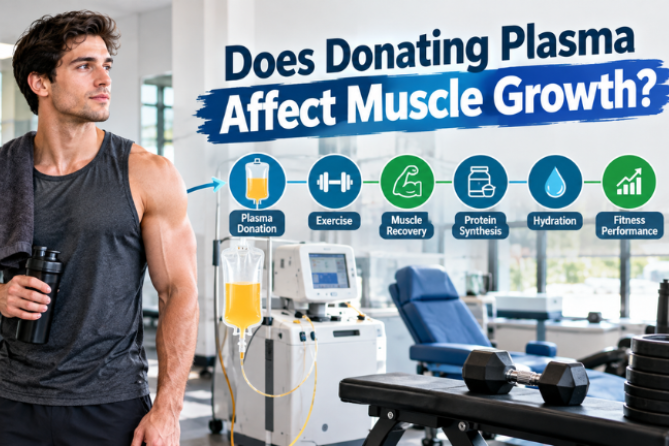
Plasma donations can save lives and are a prime example of selflessness. The noble act of plasma donation is acknowledged for its potential to save lives and the beneficial effects it has on countless patients around the world. Understanding the potential effects of donating plasma is crucial in fitness and bodybuilding, where every rep and pound of muscle counts. But for those who are committed to physical fitness and muscle development, a nagging question arises: Could giving plasma possibly have an impact on their pursuit of physical performance and muscle-building goals? Well, technically, donating plasma won’t affect your muscle growth. However, we will delve into the specific details of the relationship between plasma donation and muscle development. Are there underlying factors that people who are interested in fitness should be aware of, or can these two seemingly disparate worlds coexist peacefully?
Understanding Plasma Donation
Plasma is known as the “liquid gold” of the human body. It transports proteins, hormones, and other vital substances throughout the circulatory system. It is essential for maintaining bodily processes like immunity, clotting, and the removal of waste from cells. Plasma contains a large number of proteins and antibodies that are essential for the immune response. Plasmapheresis is the process of donating plasma that includes screening and registration, health evaluation, venipuncture, separation, plasma collection, and post-donation rehydration.
Donors are usually required to register and complete a health questionnaire. A healthcare professional then conducts a brief physical examination and checks vital signs such as body temperature, heart rate, and blood pressure. The plasmapheresis machine separates red blood cells, white blood cells, platelets, and plasma after collecting blood from the donor. To ensure that the donor loses only a small amount of blood, the blood components are returned to the donor after the collected plasma has been placed in a sterile bag. After giving plasma, donors are frequently given refreshments to replenish lost fluids and keep their energy levels up.
Importance of Plasma in Medical Treatments
Plasma is a crucial component in many medical procedures and therapies. Its constituents, including clotting factors and antibodies, are used to produce curative drugs and therapies for illnesses like hemophilia, immune disorders, and specific types of cancer. Patients who depend on these therapies to effectively manage their health need plasma-derived products.
Plasma’s versatility makes it essential in emergency, trauma, and surgical situations where access to clotting factors quickly can mean the difference between life and death. Additionally, plasma can be used to treat patients with liver diseases and burn victims, greatly aiding in their recovery.
Frequency and Process
Regional laws and the health of the individual donors determine how frequently plasma is donated. Plasma donations are typically permitted every two to four weeks in many nations, with restrictions on the total number of donations permitted per year. These limitations were put in place to protect donors and discourage excessive giving.
To protect both donors and patients receiving plasma-derived therapies, plasma donation facilities implement stringent screening procedures for potential donors, stringent hygiene standards, and well-trained healthcare professionals who monitor the process.
Plasma donation is not only a kind deed but also a vital contribution to medical care and research. Potential donors can better appreciate the significance of plasma and the donation procedure by being aware of how many lives their generosity will touch.
The Physiology of Muscle Growth
Muscle growth is scientifically known as hypertrophy and is the process by which muscle fibers increase in strength and size. Understanding the fundamental principles of muscle growth is crucial for every fitness enthusiast.
Hypertrophy occurs when muscle fibers are subjected to mechanical tension through resistance or weightlifting exercises. This tension causes microscopic damage to the muscle fibers, initiating a repair and growth process. Myofibrillar hypertrophy and sarcoplasmic hypertrophy are the two primary types of hypertrophy. Myofibrillar hypertrophy involves an increase in the size and number of myofibrils within muscle fibers, leading to increased muscle strength, while sarcoplasmic hypertrophy involves an increase in the volume of sarcoplasm, the fluid-like substance that surrounds myofibrils, resulting in increased muscle size and endurance.
In addition, muscle growth relies heavily on protein synthesis. The body combines new muscle protein to replace damaged protein structure during the repair process. Proper nutrition is also very important for muscle growth. Protein, carbohydrates, fats, vitamins, and minerals are the main nutrients for muscle growth. Protein provides the essential amino acids necessary for muscle repair and growth.
Furthermore, amino acids are the primary building blocks of proteins, and proteins are the fundamental structural elements of muscle. “Leucine” is a branched-chain amino acid (BCAA), which plays a pivotal role in repairing muscle after an extreme workout.
In summary, muscle growth primarily depends on protein synthesis and proper nutrition. Protein plays a central role in muscle growth and repair. A balanced diet rich in protein, combined with effective resistance training, is the cornerstone of achieving muscle growth and strength.
The Impact of Plasma Donation
Plasma donation is completely risk-free, and it has harmful effects on muscle growth. During plasma donation, donors only lose plasma from their blood, and other cells (red blood cells, white blood cells) are usually returned to the donor, which is why the donor’s body still contains all of the necessary nutrients, including protein and amino acids. There are a few things to consider, even though the nutrient loss is not significant. Donors need to stay well-hydrated, as blood volume may temporarily decline after plasma donation. It is advised to eat a healthy meal or snack after giving plasma to replenish nutrients and aid in the body’s healing. This can make sure that proteins and amino acids are available when needed for muscle growth and repair. Ultimately, because plasma donation only involves the removal of plasma from the blood, there is no significant nutrient loss. Nutrition and hydration after a donation can help lessen any insignificant effects on nutrient levels.
Recovery Time and Muscle Growth
Our body can quickly replace the lost plasma volume after a plasma donation. Most donors can quickly return to their regular routines, including exercise. Muscle repair and growth are based on good nutrition and rest. Maintaining a balanced diet can fulfill the protein and energy needs of the body. Donors should be properly fed and hydrated, as these actions can support overall wellness and muscle recovery. In conclusion, plasma donation has a short recovery period and is unlikely to have a substantial effect on muscle growth and recovery. With the right nutrition and hydration, exercise enthusiasts and people with muscle-building goals can continue their training routines without the donation process interfering with their goals for muscle growth.
Scientific Research on Plasma Donation and Muscle Growth
While there is limited direct scientific research specifically addressing the impact of plasma donation on muscle growth, several related studies provide insights into the topic. Protein and amino acids are not significantly lost during plasma donation, according to studies. With proper hydration and nutrition, donors can quickly recover lost plasma volume. According to research, plasma donation can cause temporary decreases in blood volume and plasma proteins. These effects, however, are transient, and the body typically returns to its baseline state within hours to a few days. Post-donation hydration and nutrition can help the body recover. Some research has looked into the effects of exercise after plasma donation. While vigorous physical activity immediately following donation is discouraged due to the risk of lightheadedness or dizziness, there is no evidence that plasma donation impairs the body’s ability to recover or grow muscle.
Despite the lack of solid evidence that plasma donation has a significant negative effect on muscle growth, there are some discussions and disagreements among scientists. Individual variability is one point of contention. Some people may experience temporary discomfort or fatigue after plasma donation, which may impair their immediate exercise performance. However, these effects are typically transient and vary by donor. Another point of contention is the timing of plasma donation with physical activity. Some experts advise avoiding strenuous exercise immediately after donation to avoid dizziness or lightheadedness. However, the effect on long-term muscle growth is unknown. The scientific community generally agrees that after plasma donation, donors should prioritize hydration and nutrition. There may still be ongoing discussions about the most effective post-donation recovery practices for people with specific fitness goals.
In conclusion, while there has been little direct research on the subject, existing studies indicate that plasma donation does not significantly impair muscle growth. Individual experiences may differ, but with proper care, the short-term effects on exercise performance are generally manageable. Donors are encouraged to consult with healthcare professionals or fitness experts for personalized guidance to address any potential controversies or debates.
Real-Life Stories: The Impact of Regular Plasma Donation on Fitness and Muscle Growth
While scientific research is useful, personal experiences can provide a unique perspective on the intersection of plasma donation and fitness goals. Here are a few real-life examples of people who have regularly donated plasma and how it has impacted their journey toward muscle growth.
Maria, one of my coworkers, is a regular plasma donor. She frequently describes her journey as a balancing act between two passions: helping those in need and reaching her fitness objectives. Despite regularly donating plasma, she has made significant progress in her muscle growth journey. Her secret is careful planning and self-care. Maria makes it a point to donate on rest days or days with fewer workouts. She is also very concerned with post-donation nutrition, emphasizing protein-rich meals and hydration. Maria’s story exemplifies that with careful planning and self-awareness, individuals can continue to make strides in their fitness journey while contributing to a vital cause.
Mark, one of my closest friends and a plasma donor, admits that plasma donation occasionally interferes with his workout performance. He recalls feeling dizzy after donating. Mark, on the other hand, has modified his training regimen to account for these sporadic challenges. He chooses lower-intensity workouts or shifts his rest days accordingly on donation days. This enables him to continue progressing toward his muscle growth objectives. Mark’s story emphasizes the value of adaptability and flexibility in the face of potential post-donation challenges. Emily, a plasma donor and fitness competitor, emphasizes the importance of nutrition in reducing the side effects of plasma donation. She prioritizes her diet, making sure she gets enough protein and calories to support muscle recovery and growth. Emily also strategically plans her donation sessions, often scheduling them after her most intense training days. This method, she discovers, minimizes any potential impact on her workout performance. Her story emphasizes the importance of nutrition and timing in maximizing muscle growth while still donating plasma.
While plasma donation can present some challenges for fitness enthusiasts, with careful planning, hydration, and nutrition, people can successfully navigate both their altruistic endeavors and their muscle growth journeys. Each of these people exemplifies the value of adaptability and self-awareness in striking a balance between their fitness goals and their desire to help others through plasma donation.
Balancing Plasma Donation and Muscle Growth
Here are some helpful hints and strategies for athletes and fitness enthusiasts who want to donate plasma while minimizing the effects on muscle growth.
Plan your plasma donation to coincide with a rest day or a lighter workout session. In addition, eat a balanced meal that includes carbohydrates, protein, and healthy fats before the plasma donation. Dehydration can exacerbate potential side effects, so drink plenty of water throughout the day. Consume a protein-rich meal or snack after donation to aid muscle recovery. Include lean proteins like chicken or fish, as well as plant-based proteins like tofu. It is best to avoid strenuous exercise immediately after donating plasma. Instead, do lighter exercises like stretching or gentle walking. Take note of how you feel after donating. Prioritize rest and recovery if you experience dizziness or weakness. Be adaptable in your workout routine. Consider swapping out intense workouts for lighter ones if you feel fatigued or lightheaded on donation days. Continue to drink water in the days following your donation to stay hydrated. Hydration is important for overall recovery. Be mindful of your overall nutrition. If you have any concerns about the impact of plasma donation on your fitness goals, talk to your doctor. They can offer personalized guidance.
You can donate plasma while minimizing potential disruptions to your muscle growth journey by following these strategies. Remember that everyone’s body reacts differently, so tailor these suggestions to your specific needs and preferences.
Conclusion
Plasma donation is a noble act that contributes to healthcare and medical treatments, and it does not lead to significant nutrient loss that hinders muscle growth. While plasma donation is an important and selfless act, it is important to recognize its potential effects on fitness goals, particularly muscle growth. Although scientific evidence indicates that the impact on muscle growth is minimal, people should put their health and fitness needs first.
Balancing plasma donation and muscle growth necessitates meticulous planning, hydration, and nutrition. Fitness enthusiasts should adjust their workout routine as needed. Moreover, listening to your body is always recommended.Finally, donating plasma is a selfless act that saves lives, and individuals can continue their fitness journey while making a positive impact on the world by exercising mindfully and taking care of themselves.