Nike’s Vapormax is one of the most popular sneakers in the world. They are famous for their futuristic design and innovative cushioning technology. VaporMax sneakers are more than just sneakers; they are a fashion statement, a symbol of comfort, and a must-have for many. One thing, though, that sneaker fans are curious about is: can you wear VaporMax in the rain?
We will delve into the world of VaporMax footwear, the pros and cons of wearing them in the rain, essential tips to keep your VaporMax looking fresh, and even introduce you to some weather-ready alternatives for those soggy days. Let’s find out if these cutting-edge sneakers can conquer the rain!
Understanding Vapormax Shoes: A Sneaker’s Anatomy
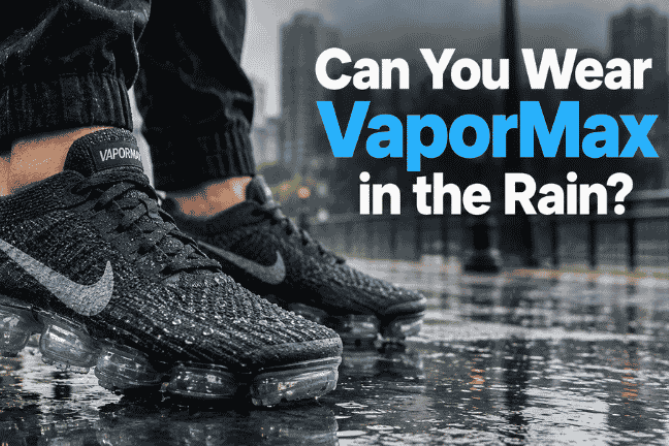
The visible air technology built into the sole of Vapormax shoes is their defining feature. Traditional cushioning systems rely on foam or gel encased within the midsole, while VaporMax boldly unveils its cushioning prowess. The sole of the shoe is strategically dotted with numerous air units that resemble clear bubbles, giving it a unique appearance and an unmatched sense of airiness.
Flyknit is a lightweight, breathable, and stretchy material that conforms to the shape of your foot and delivers a snug and adaptive fit. Shoes made with Nike’s Flyknit technology, like the VaporMax, are a game-changer for those who want comfort without sacrificing style. Flywire cables are strategically incorporated into the Flyknit upper to improve support and lockdown. These incredibly thin cables function like the cables on a suspension bridge, providing stability exactly where it is needed without adding extra weight. The outsole of VaporMax shoes is constructed from durable rubber, which provides excellent traction on different surfaces and ensures steady feet in almost every situation. In addition, VaporMax shoes are remarkably lightweight and deliver a responsive and energy-returning cushioning experience. The Flyknit upper, combined with the exposed air units, promotes superior airflow, keeping your feet cool and comfortable even during the most demanding activities.
In summary, Vapormax shoes represent the pinnacle of Nike’s design and technology prowess. With their unique design, innovative materials, and groundbreaking Vapormax technology, they offer a fusion of style and performance that’s hard to beat. But the question remains: Can these striking sneakers withstand the rain, or should they be reserved for sunnier days? Let’s continue our exploration to find out.
Rain and Sneakers: A Tricky Relationship
Rain typically makes sidewalks and streets slick, which raises the possibility of accidents, slips, and falls. VaporMax outsoles’ traction might not be enough to safely navigate these slick surfaces. While some sneakers are waterproof, the majority of them can absorb water like a sponge and leave your feet feeling cold and uncomfortable. Exposing sneakers to moisture regularly can significantly reduce their lifespan. The materials may break down more quickly, and the color or appearance of the shoes may deteriorate over time.
Water-resistant sneakers are equipped with materials and coatings that repel water, keeping your feet dry and comfortable. They are specifically engineered to resist moisture penetration, and many water-resistant sneakers feature outsoles with superior grip, providing better traction on slippery surfaces. This reduces the risk of slips and falls. In addition, water-resistant materials are often more durable and less prone to damage from exposure to moisture. Investing in these shoes can extend their lifespan and save you money in the long run.
Vapormax: Water Resistance vs. Water Absorption
Although Vapormax shoes are renowned for their distinctive style and cutting-edge construction, it is important to comprehend their water resistance limitations. The Nike Flyknit technology is frequently used in the construction of the Vapormax shoe’s upper. Flyknit is a flexible, breathable material that is known for its close fit. Due to the tightly woven fibers, Flyknit can repel water to some extent, but it is not waterproof by nature. The exposed air cushioning units in the sole are one of the defining characteristics of Vapormax shoes. Despite the fact that this design feature adds to their comfort and style, it also means that the shoe is without a traditional foam midsole, which could act as an additional water-repellent barrier. Given its tightly woven design, Flyknit technology does provide some water resistance. In light rain or other wet conditions, the densely knit fibers create a surface that can slow down the penetration of water, giving you a small window of opportunity to react and protect your feet. This indicates that Flyknit might offer some protection in gloomy conditions or during brief contact with water. Flyknit can initially repel water, but it must be understood that this does not make it completely waterproof. Water absorption can happen as a result of prolonged rain exposure or submersion in water. There are a number of consequences that can happen when water is absorbed by the Flyknit upper, including discomfort, the sensation of soggy socks, hot spots, and decreased durability.
In conclusion, Vapormax shoes offer some water resistance due to their Flyknit uppers and exposed air units, but they are not entirely waterproof. If you intend to wear them in rainy conditions, it is advisable to take precautions like using water-repellent sprays, wearing waterproof socks, and avoiding deep puddles, even though they may offer protection in light rain or for brief periods of time. It is usually preferable to choose footwear specifically made to be waterproof for prolonged exposure to wet weather. Take note that Nike recently debuted some superb waterproof VaporMax shoes. All the negative effects and drawbacks associated with wearing these shoe models in the rain might not apply to them.
Tips for Wearing Vapormax in the Rain
You can take a few sensible precautions to lessen the potential harm and increase the water resistance of VaporMax shoes before wearing them in wet weather. Get a pair of dry, clean shoes first. Clear the upper of any dirt or debris, hold the spray can 6 to 8 inches from the shoes, and coat it evenly with the repellent. Pay close attention to the Flyknit upper, but also pay attention to the exposed air units and outsole. In a well-ventilated area, let the shoe air dry for a few hours, ideally overnight. Stay away from harsh sunlight and high temperatures because they can harm the shoes. Apply the water-repellent spray again every so often, especially if you wear your Vapormax shoes a lot in wet environments. In order to increase the safety of your VaporMax shoes on rainy days, you can also think about wearing waterproof socks and avoiding deep puddles and waterlogged areas. Eventually, after each use, clean and dry your shoes.
Alternatives for Rainy Days
For wet weather, Nike provides some specialized alternatives to traditional shoes. The Nike ACG line and the Nike Shield line are two standout options to handle the challenge of inclement weather, despite the fact that Nike also produces some waterproof VaporMax shoes.
To keep your feet dry and comfortable, ACG shoes frequently use weather-resistant materials like Gore-Tex or DWR (durable water-repellent) treatments. The aggressive tread design of ACG outsoles provides excellent traction on slick surfaces, making them perfect for wet conditions. Generally speaking, these shoes are more durable than casual VaporMax sneakers because they are made to withstand challenging conditions.
Conversely, the water-repellent coatings on Nike Shield shoes help to keep your feet dry in light rain or other wet conditions. These running-specific shoes feature responsive cushioning and a lightweight design with an emphasis on running performance.
Compared to standard Vapormax shoes, the ACG series and the Shield Collection both place a high priority on water resistance. As opposed to VaporMax, which frequently causes slips and falls on wet surfaces, the ACG and Shield models’ outsoles are made with superior traction. Shoes from ACG and Shield are made to withstand rough terrain, possibly providing a longer lifespan than shoes made for different terrains. While VaporMax shoes are fashionable and adaptable, ACG and Shield models are designed for particular activities and climates.
The Debate: Should You Wear Vapormax in the Rain?
Standard VaporMax footwear is renowned for its design and cushioning innovation. Due to their Flyknit construction, standard VaporMax shoes are not completely waterproof, but the waterproof version offers water resistance and can be worn in the rain. Standard VaporMax shoes should not be worn in the rain, despite the fact that taking precautions before doing so can be helpful. Additionally, VaporMax shoes have less traction than other shoes made for wet conditions, which increases the chance of accidents and falls when wearing them in the rain.
Finally, it is not advised to use VaporMax while it is raining. Instead, give the ACG series or the Shield collection a try. But if you really want to wear the VaporMax in the rain, take extra precautions, like using water-repellent spray and wearing waterproof socks.
Conclusion
The VaporMax shoes are undoubtedly a stylish and appealing option. Although they are not the best to wear in the rain, they can offer protection when briefly exposed to moisture or light rain. However, we have repeatedly stated that while the Waterproof VaporMax series from Nike may be worn in the rain, you should avoid wearing the regular VaporMax in very heavy downpours. Even though you can take precautions and wear them in light rain, your shoes might get damaged. However, it is best to wear Nike’s specialized alternatives, such as the ACG and Shield Collection, in those circumstances.
If comfort and style are your only concerns, put your safety first, use a water-repellent spray, wear waterproof socks, and wear your VaporMax shoes in less-than-ideal weather.